Designing the
Smart Home
Ecosystem
From ecommerce to in-store — a connected experience across digital and physical touchpoints, spanning 40+ markets and millions of interactions.
Overview
Two touchpoints. One ecosystem.
Smart home technology is invisible — it's about behaviour, automation, and atmosphere, not just form factor. Customers struggled to understand its value through static product pages. IKEA needed to build credibility while reducing cognitive and emotional friction, both online and in the physical store.
This case study covers two interlocked projects: a web-based interactive demonstrator for ikea.com, and a physical in-store experience in collaboration with SONOS — both sharing the same strategic foundation, personas, and design language.
Shared Challenges
What both projects had to solve
Experience it to believe it
Smart home concepts felt abstract online and in-store. Users needed to see, interact, and feel the value — not just read about it.
Feel smart, not stupid
Technical jargon created anxiety. The experience had to make users feel competent regardless of their tech confidence.
Prove IKEA's credibility
IKEA was entering a new category. The design needed to establish trust and authority in the smart home space without alienating existing customers.
Research
User Personas
Four distinct personas mapped across a willing/able axis — from enthusiastic beginners to time-pressed pragmatists — shaped every design decision.
Ambitious Amateur
Excited about smart home but easily overwhelmed by technical complexity.
High willing · Low ableDo It For Me
Wants the outcome without the setup effort. Values trust and simplicity above all.
Low willing · Low ableCompetent Enthusiast
Already has smart home devices. Wants depth, control, and IKEA's ecosystem benefits.
High willing · High ableBusy Pragmatist
Capable but time-poor. Needs clear value proposition and fast, frictionless setup.
Low willing · High ableChapter 01
Web Demonstrator
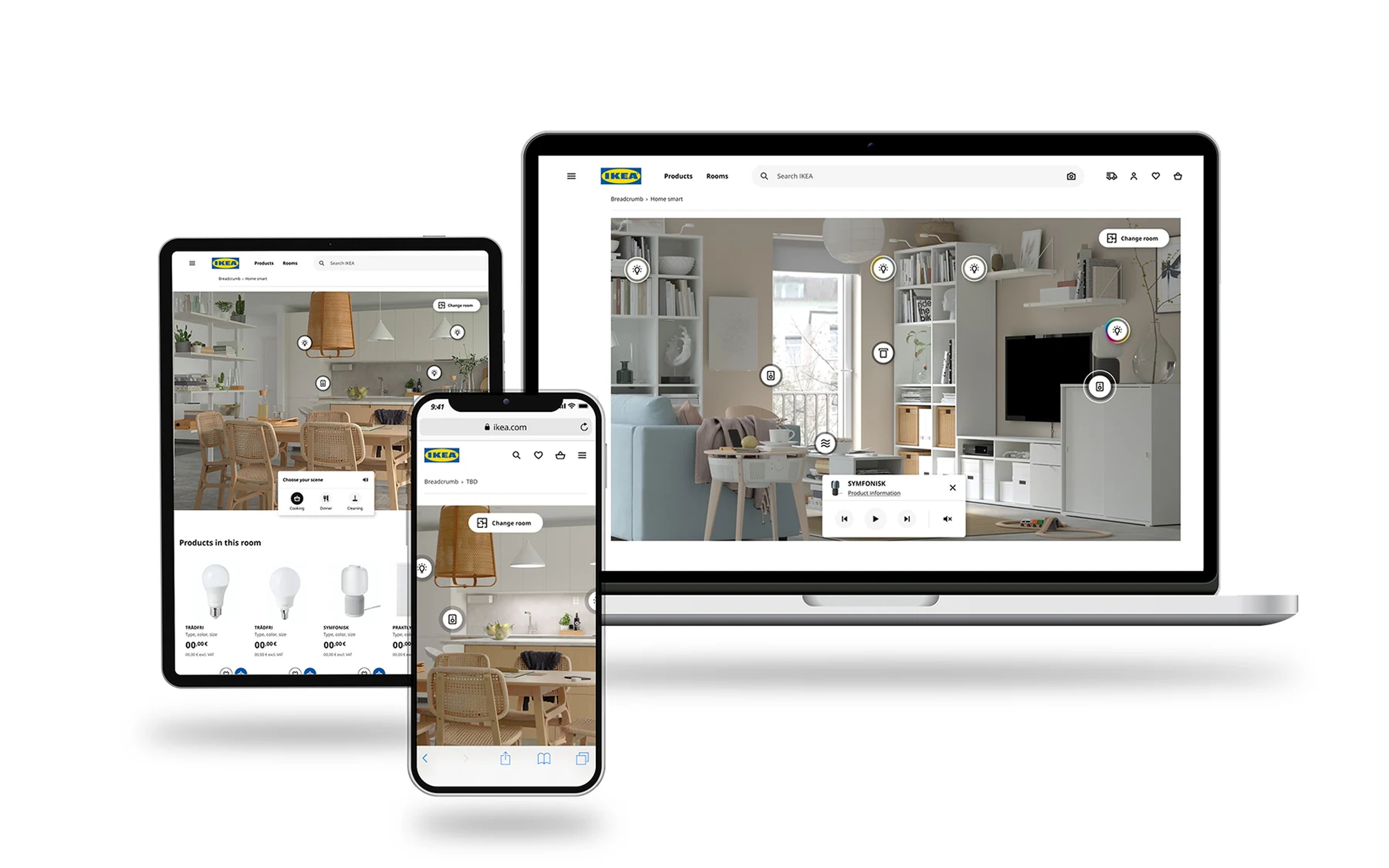
ikea.com · Desktop + Mobile · 40+ Markets
Research
Research & Workshops
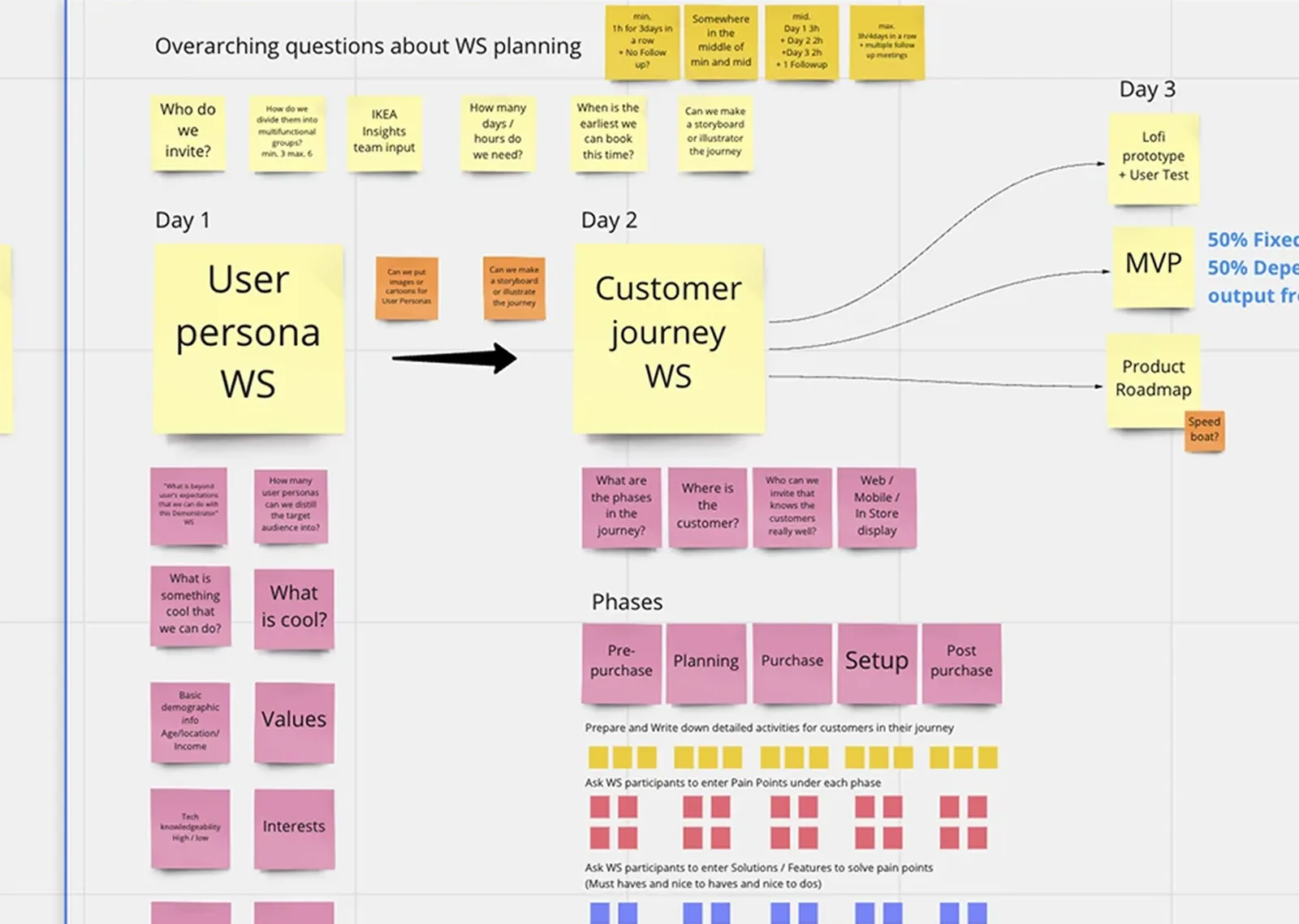
User research established the willing/able persona matrix and surfaced the core insight: customers needed to experience smart home outcomes — not features. Workshops with the IPEX team aligned design direction across content, engineering, and product.
- Persona workshops with IPEX stakeholders
- Competitive analysis across 8 smart home brands
- Usability testing on low-fidelity prototypes
- WCAG compliance audit across all components
- Iterative testing across desktop and mobile breakpoints
workshop-photo-web
Co-design workshop with IPEX team and IKEA stakeholders
Wireframes
Wireframes & Prototyping
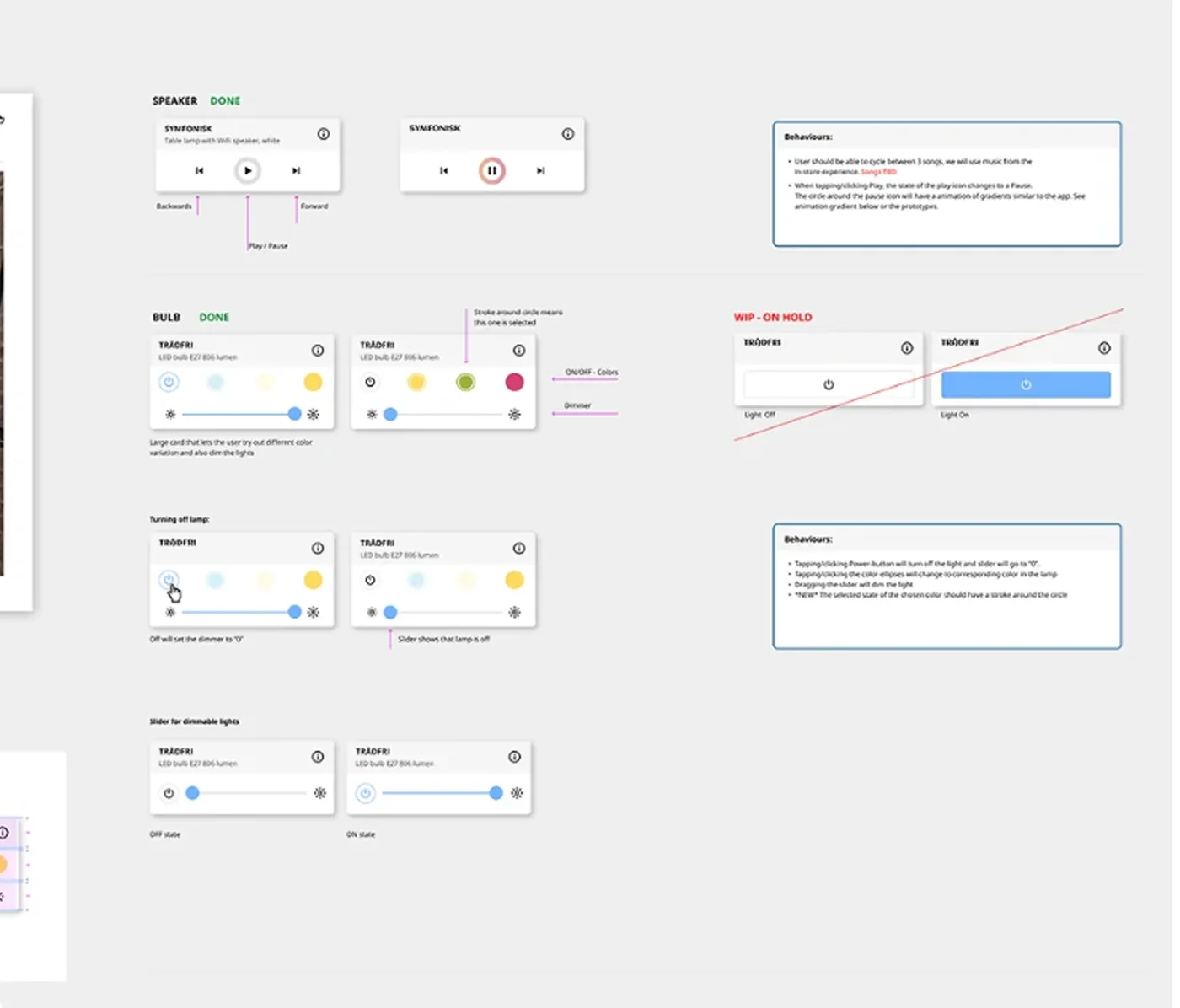
Rapid wireframe iterations moved from low-fidelity page structures to interactive prototypes tested with real users. The mobile experience was designed in parallel — not adapted from desktop.
wireframe-web-desktop
Desktop wireframe — smart home demonstrator landing, room selector, product integration
wireframe-web-mobile-1
wireframe-web-mobile-2
Visual Design
Interface Design — Web
ui-web-final
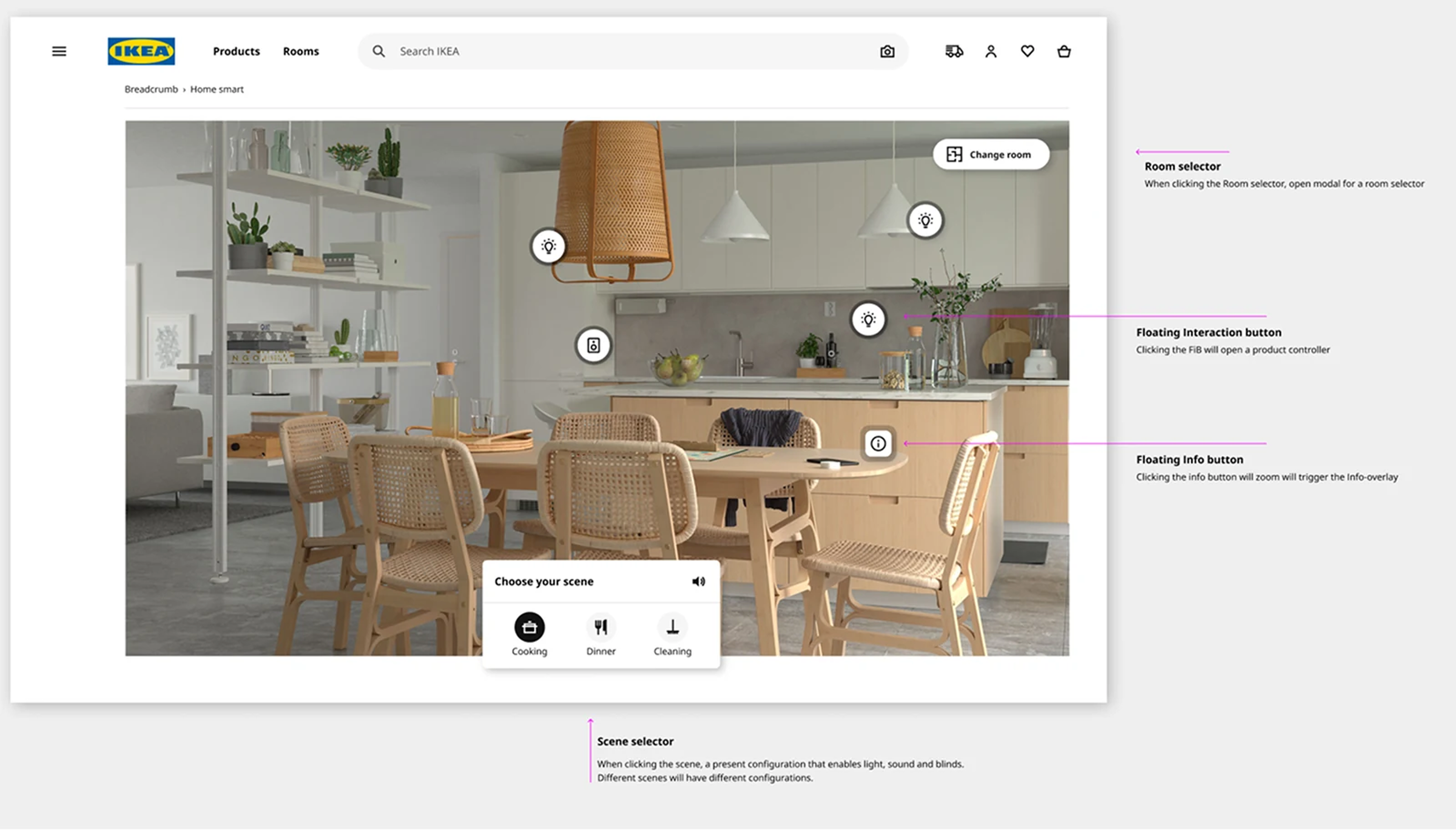
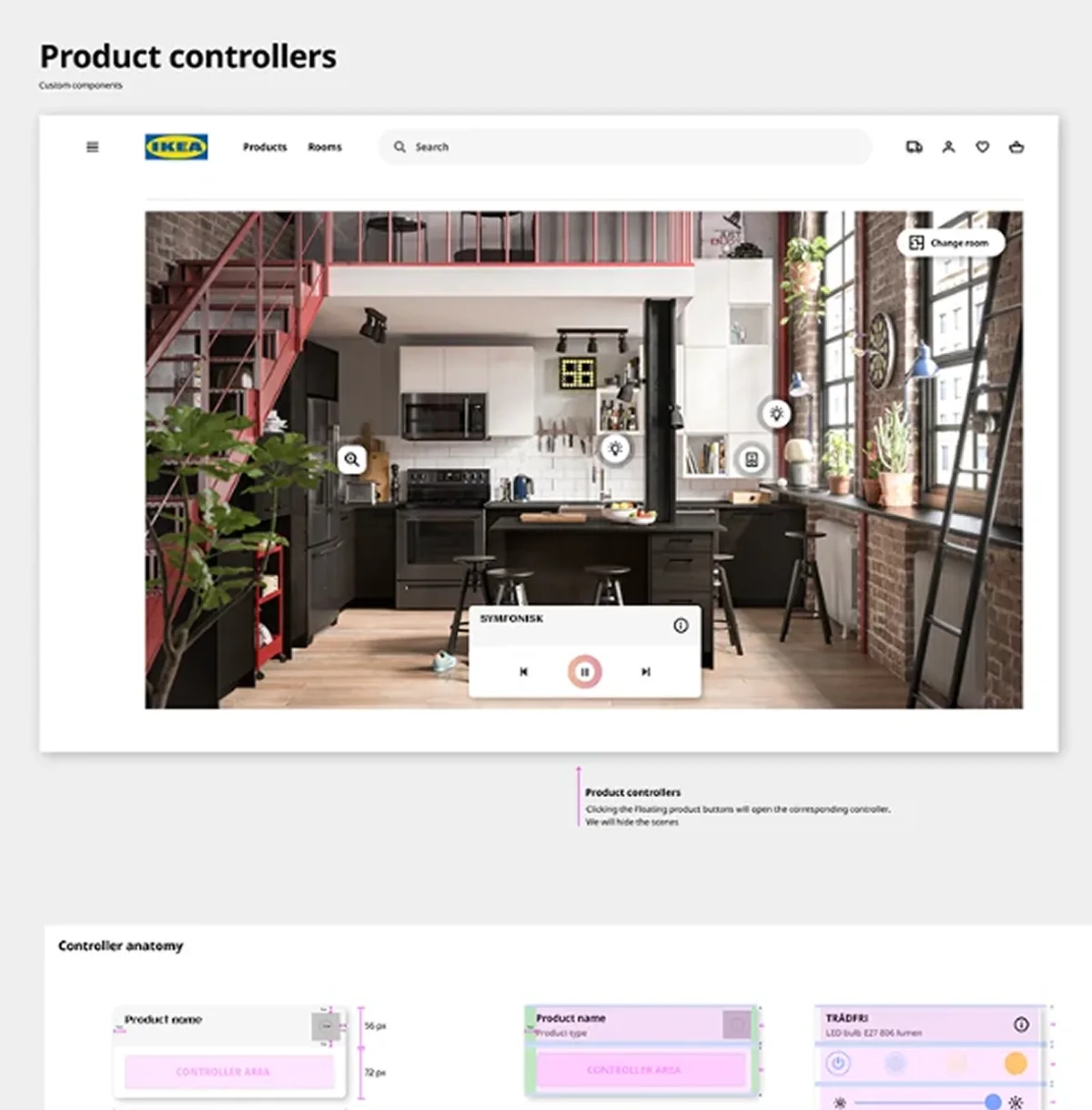
Final web interface — product demonstrator with interactive scene builder
ui-web-mobile-1
ui-web-mobile-1
ui-web-mobile-2
ui-web-mobile-2
ui-web-mobile-3
ui-web-mobile-3
Accessibility
WCAG AA Compliance
All interactive components across the web demonstrator were audited and built to meet WCAG 2.1 AA standards — covering colour contrast, keyboard navigation, focus states, and screen reader compatibility. Compliance was verified across all 40+ market implementations.
Chapter 02
In-Store Experience
IKEA × SONOS · Global Stores · 125K+ Footfall
Concept
The Scene Concept
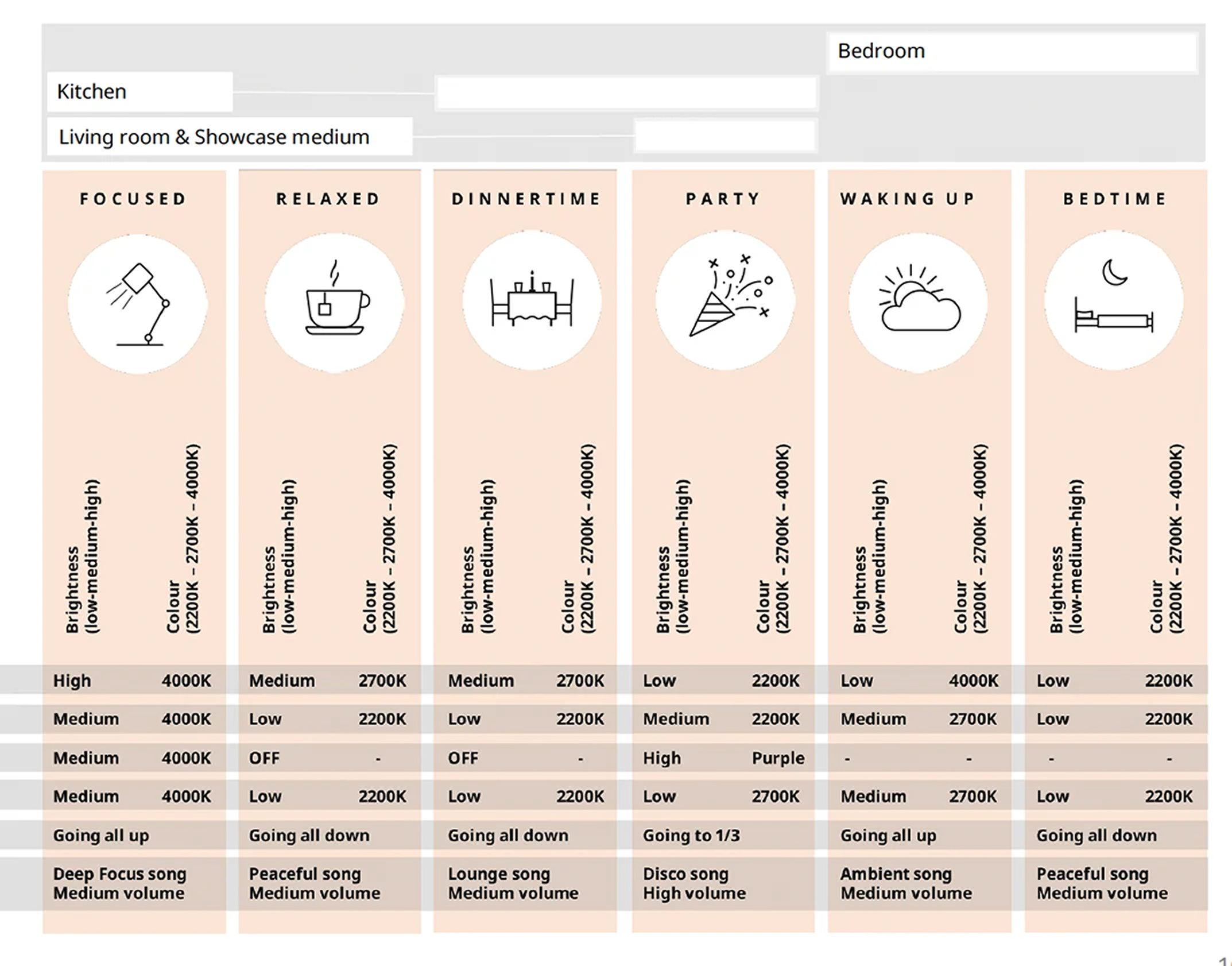
Instead of showing products, we showed moments. "Scenes" became the organising metaphor — ambient lighting and audio states named after the human situations people actually live in. Wake Up. Party. Dinner. Movie Night. Focus. Wind Down. Each scene combined IKEA lighting products with SONOS sound, experienced in a real room setup on the store floor.
Wake Up
Bedroom
Gentle light fade + morning playlist
Party
Living Room
Colour scenes + high-energy audio
Dinner
Dining Room
Warm whites + ambient background
Movie Night
Living Room
Bias lighting + cinema presets
Focus
Home Office
Cool daylight + lo-fi audio
Wind Down
Bedroom
Dimming sequence + sleep sounds
Structure
Information Architecture
The in-store interface needed to guide unassisted customers through product discovery and scene exploration in a retail environment — without staff help, often on a single screen embedded into a room setup.
ia-instore
In-store interface IA — scene-first navigation with product integration and add-to-bag flow
Visual Design
Interface Design — In-Store
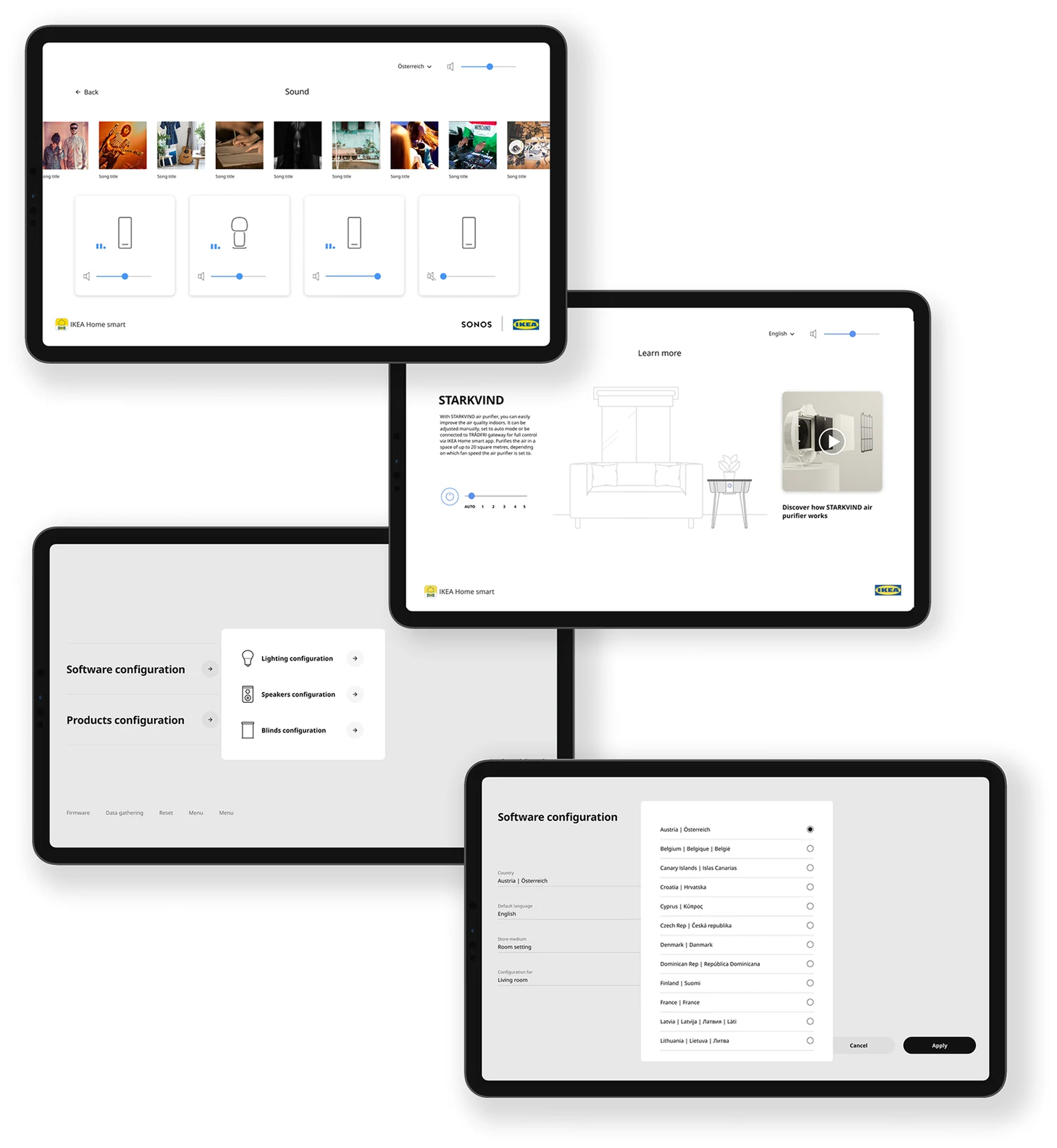
Tablet-native layouts designed for ambient retail conditions — high contrast, large touch targets, and a deliberate calm that didn't compete with the physical room setup around it.
ui-instore-1
ui-instore-2
ui-instore-3
ui-instore-4
Validation
User Feedback
In-store usability testing with real IKEA customers confirmed the scene-first approach worked: participants engaged with the interface without instruction, moved through scenes fluidly, and frequently added products to the bag directly from the kiosk.
The "calm, not clever" design principle was validated — the interface didn't intimidate. First-time smart home buyers felt confident enough to self-serve.
- Customers navigated without staff assistance
- Scene naming resonated strongly across age groups
- SONOS audio added perceived value to IKEA lighting products
- Add-to-bag conversion tracked directly from kiosk interactions
usability-testing-photo
In-store usability session — IKEA store environment
Impact