
Giving every track
its way back home.
As Founding Designer, I shaped and shipped OHR's 0→1 alpha: a tracklist-crediting engine that connects a DJ set to the artists, labels and scenes behind it.
Relevant for: 0→1 products · Founding design · Music tech
- Role
- Founding Designer
- Period
- 2024–Present
- Stage
- Live alpha · Pre-funding
- Owned
- Product structure · UX · UI · Design system
01 · Context and role
Club culture runs on credit that disappears online
A DJ set creates a chain from listener to track, artist, label and scene. Most platforms flatten that chain into a stream. Producers cannot see where tracks travel; fans cannot continue discovery; DJs lose context when mixes are reposted.
What I owned
- 0→1 product structure, core flows and interface direction
- Listening, tracklist, profile and crediting experiences
- MVP scope and sequencing with the founders
- Design-system foundations and front-end implementation support
02 · Shipped core
Turn a two-hour mix into a navigable credit map
The alpha begins with a SoundCloud mix, keeps its artwork and metadata, and gives the DJ a waveform-synced editor for building a credited tracklist. Published mixes connect each timestamp to an artist, label, album, genre and BPM—turning listening into contextual discovery.
● Shipped in alpha
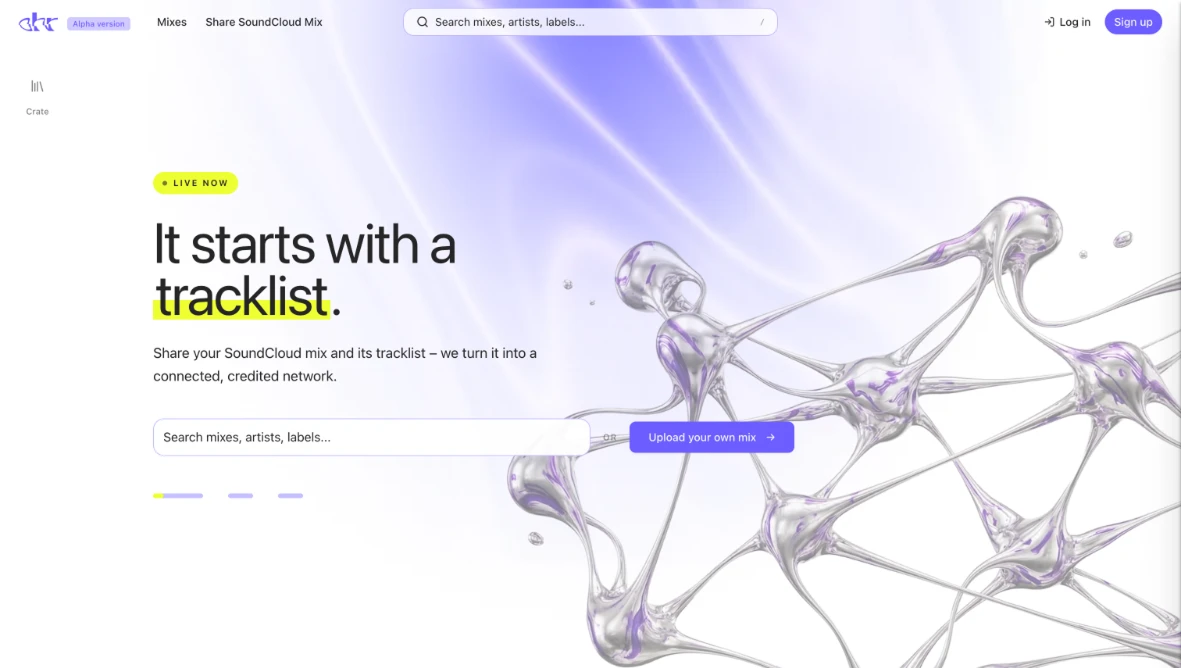
The live alpha. A SoundCloud mix goes in; a credited, connected tracklist comes out.
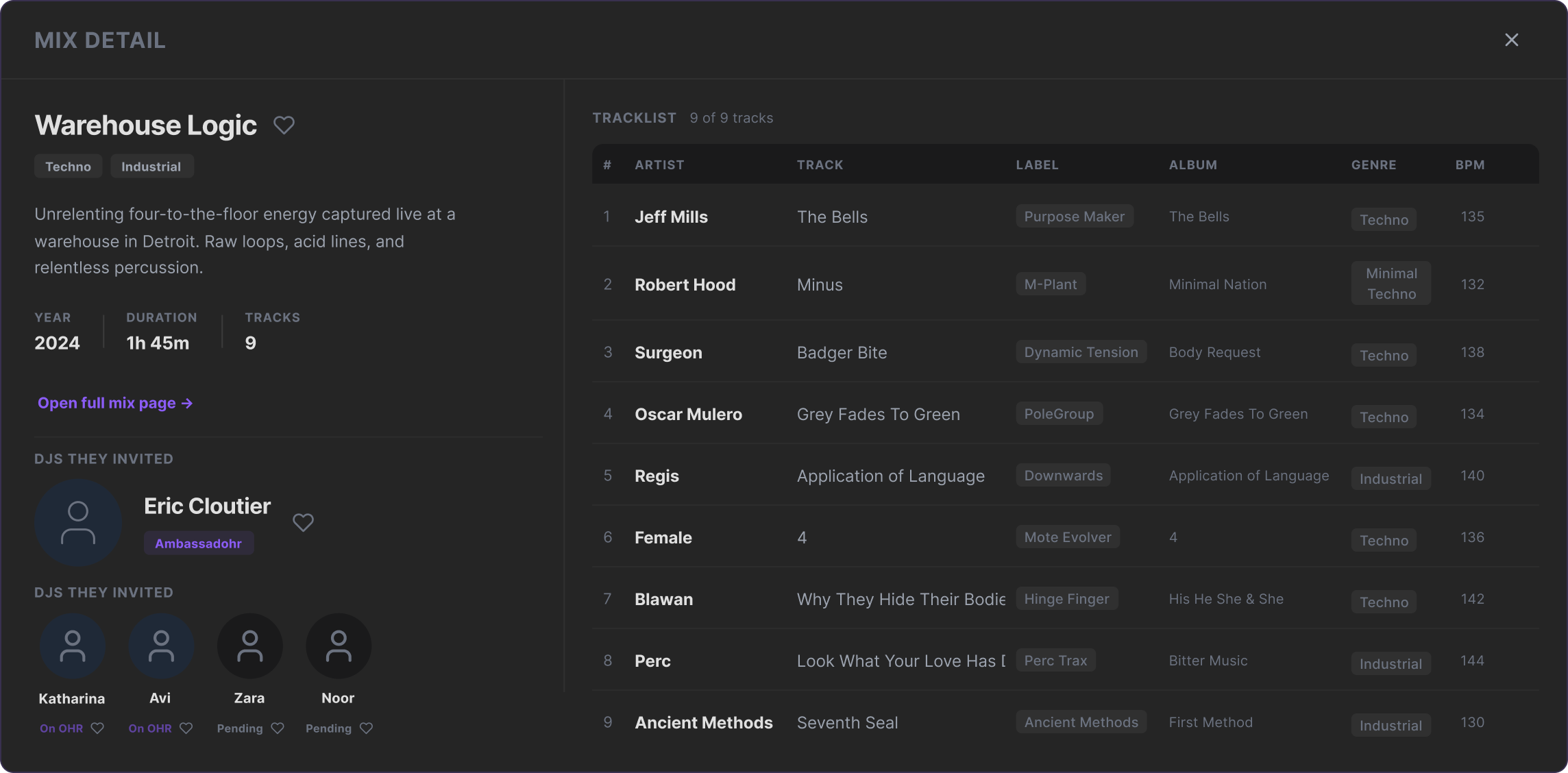
The shipped mix detail keeps the set, tracklist and invited contributors in one place. Credit is part of listening—not a separate admin layer.
01
Connect
Authenticate SoundCloud once and choose a public mix.
02
Credit
Add timestamps through the waveform or import a Rekordbox tracklist.
03
Verify
Match artists and releases through Discogs-linked autocomplete.
04
Publish
Create a mix page with every contributor linked and discoverable.
03 · MVP decisions
Prove attribution before building a social network
The early product needed one behaviour worth returning for. We prioritised mixes, visible credits and connected discovery over broad posting, heavyweight profiles or native upload infrastructure.
- 01SoundCloud linking removed duplicate upload work for DJs.
- 02The waveform editor became the trust layer for manual verification.
- 03Profiles stayed lightweight until the network had enough behaviour to support them.
- 04Social and monetisation concepts remained labelled as vision—not shipped alpha.
04 · Product vision
Beyond the alpha
The wider direction connects discovery, collectives and direct support. That is a product direction, not a claim about what is live today.
05 · Direction under consideration
What happens when discovery has a name attached?
Attribution only works if someone is there to receive it. This direction explores a social layer where every post attaches to a real music object underneath: a track, a DJ, a mix, a label, a venue.
It is a considered direction, not shipped work. Nothing here is live in the alpha today.
◇ Concept · not in the alpha
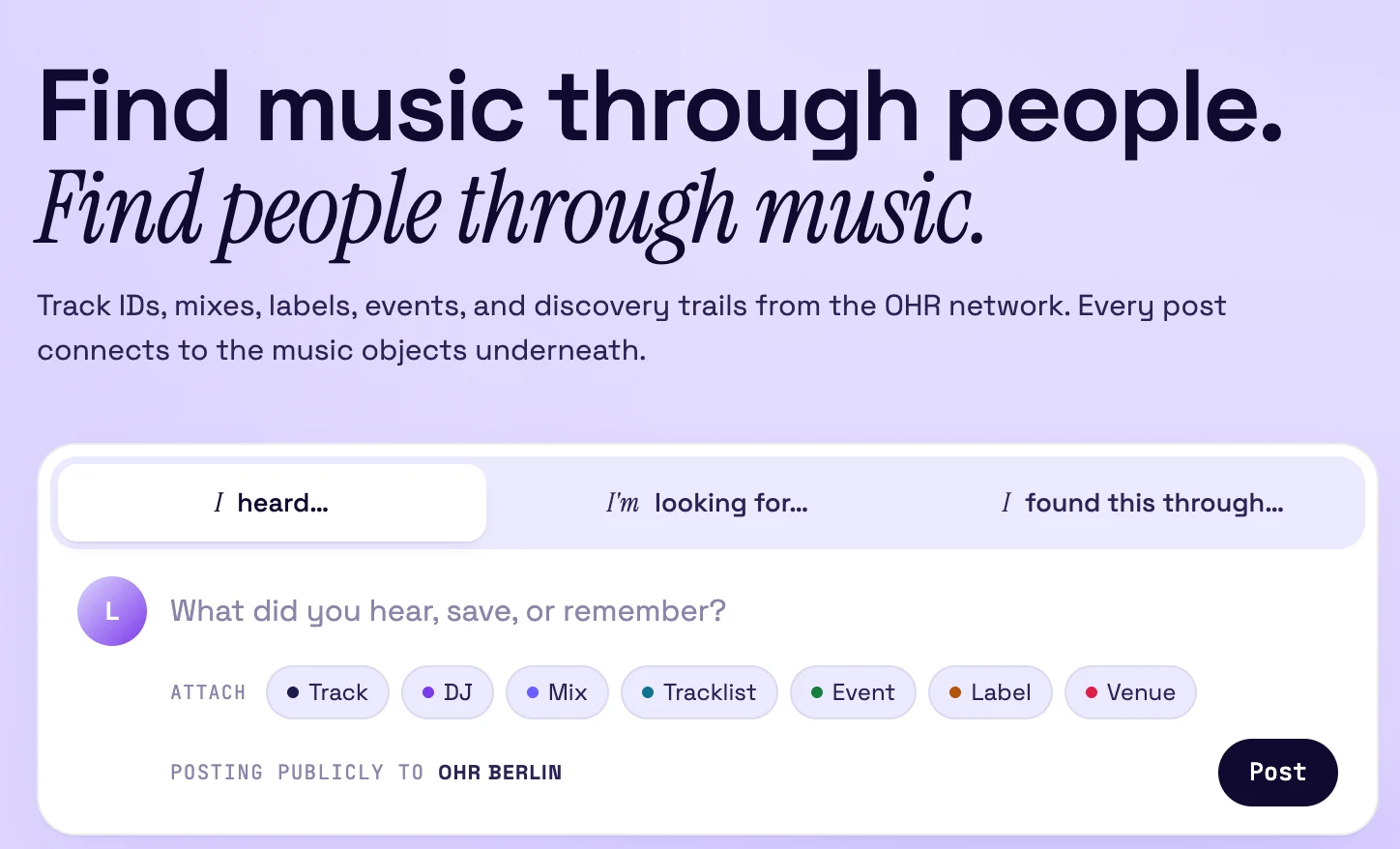
The composer, prototyped directly in code. The segmented control, the sheen behind the active tab, and the attach-chip states are all CSS. Building it in the browser meant testing the feel of the transition rather than describing it.
Screen recording of the coded prototype. Nothing in this clip is running in the live alpha.
06 · Community evidence
Community input changed the sequence
Feedback from DJs, ambassadors and collectives—including Berlin's BLVSH community—pushed credit and context ahead of social posting. Discovery without attribution would have repeated the extractive pattern OHR was built to challenge.
Supported by
 Club Commission Berlin
 Music WorX
07 · Design system
One token set, two themes, built from scratch
OHR had no design system. I built one: a single semantic token layer drives both light and dark, so components never encode a theme directly. Colour primitives sit underneath and are never used directly in components. Type runs on a perfect fourth scale, spacing on a 4px rhythm, with AA contrast called out wherever light mode needs a darker value. It is written to be rebuilt as Figma variables.
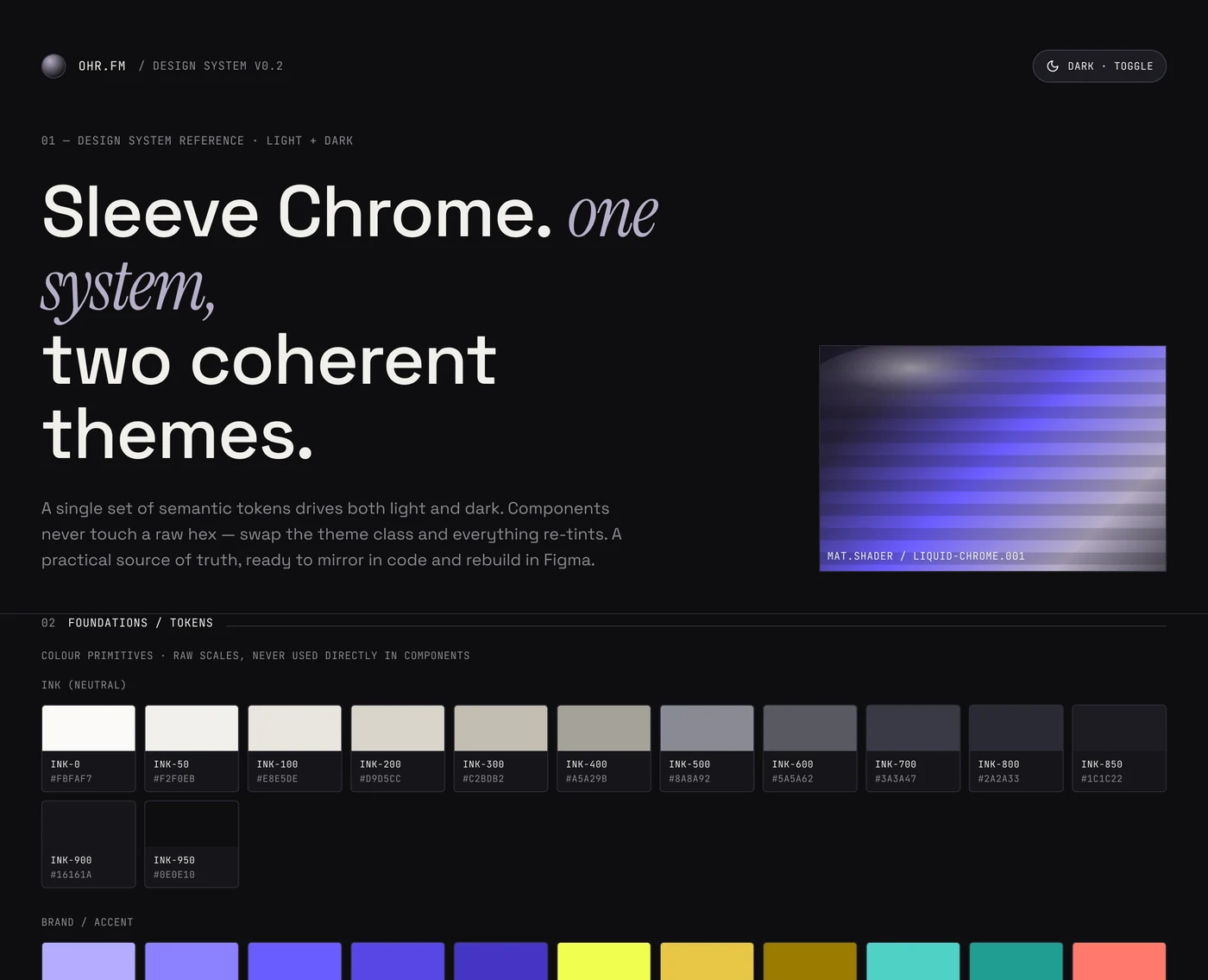
The reference opens with the theme statement, then the ink and brand primitive scales.
08 · Current state and reflection
Live alpha. Narrow proof. Clear next questions.
OHR is live with an early community of DJs, ambassadors and collectives and is still pre-funding. The alpha proves that a set can become a useful, credited object. It does not yet prove the wider social or monetisation model.
What I learned
A founding designer's job is often subtractive. The strongest product decision was keeping the alpha centred on attribution while the team learned what the community would trust and use.